
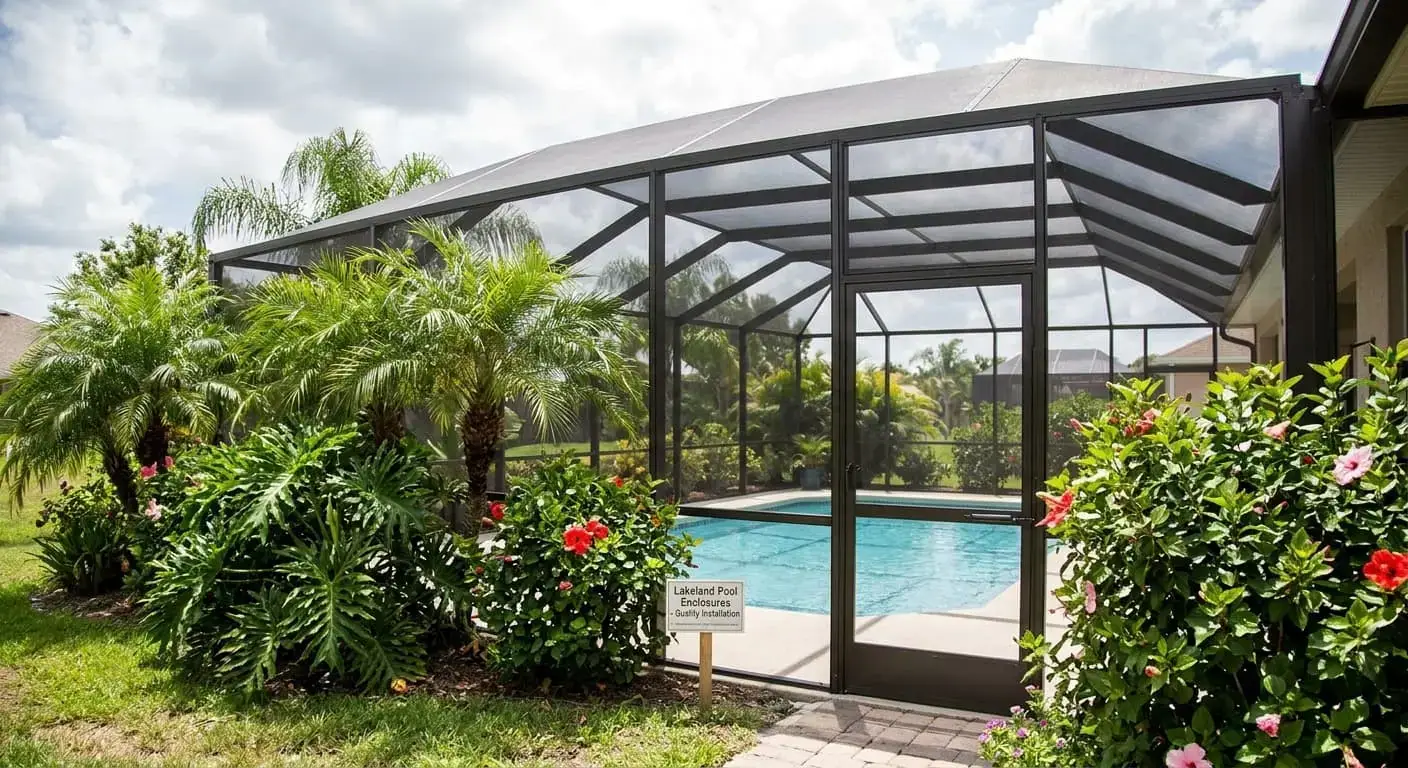
Polk County homeowners should prepare for more than heavy rain this winter. NOAA’s outlook favors wetter-than-average conditions across Florida, while a strengthening El Niño may increase the risk of active storm patterns. Recent flooding in Polk County also shows how quickly several inches of rain can affect roads, yards, and outdoor structures. For homeowners with pool cages and screen enclosures, the priority is to check drainage, inspect aluminum frames, and address existing damage before the next major storm.
Key Statistics on Polk County Flooding & Super El Niño Winter Outlook
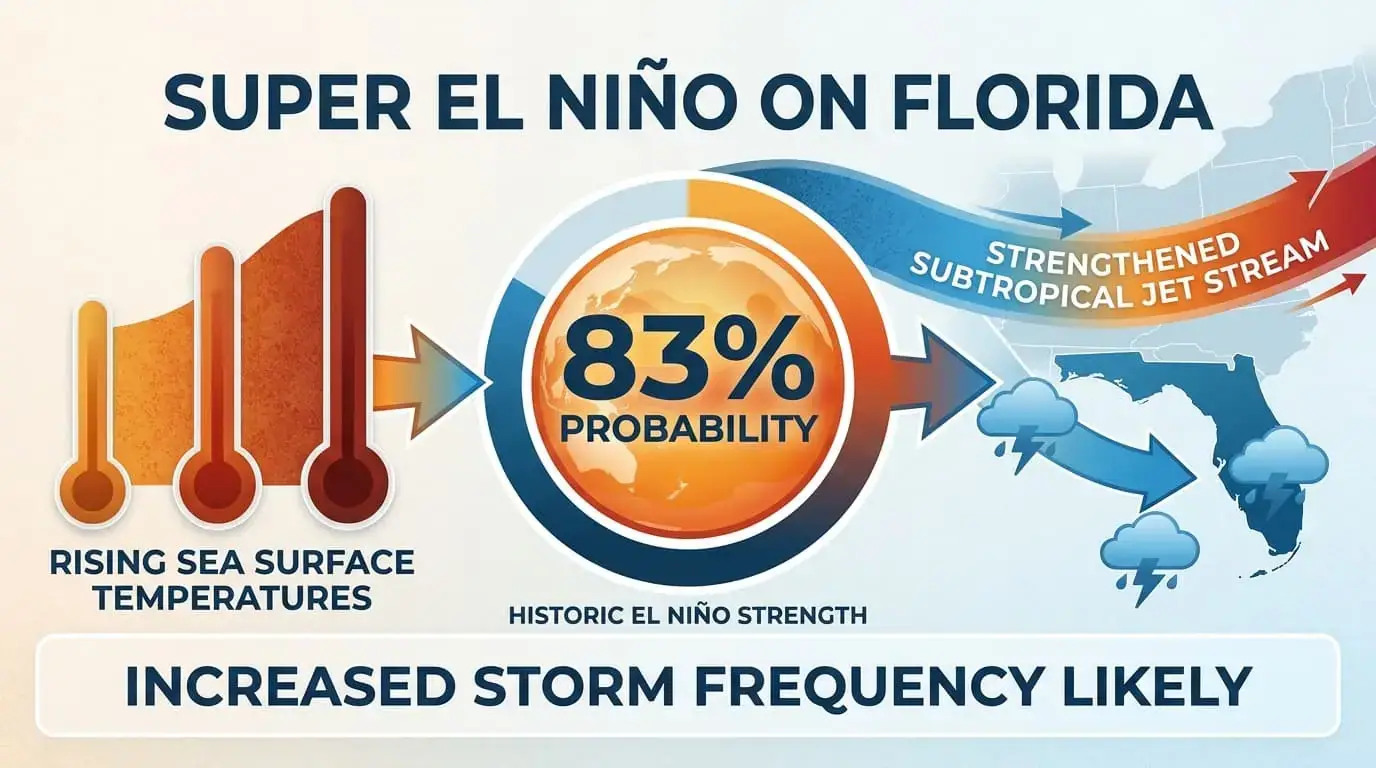
The following figures explain why Central Florida homeowners should review their outdoor structures and storm preparations before winter.
- Up to 6 inches of rain: Parts of Polk County received between 3 and 6 inches during the November 2, 2026, rain event, according to the National Weather Service (NWS). The total shows how quickly heavy rainfall can overwhelm low-lying areas.
- Wetter-than-average winter outlook: NOAA favored above-average precipitation across the southern United States, including Florida, for December 2026 through February 2027. This is a seasonal probability, not a guarantee of flooding in every community.
- 83% chance of a historic El Niño: NOAA’s October 2026 discussion gave an 83% chance that the October to December event would exceed the strength of previous El Niño events dating back to 1950.
- 1997 to 98 wet winter: The strong El Niño of 1997 to 98 brought unusually wet conditions to parts of the southern United States. Florida experienced a notably wet November to March period, according to historical reporting and climate records.
- Nearly twice as many tornado events: Historical analysis cited by Florida weather reporting found that Central and South Florida average nearly twice as many tornado events during El Niño winters as during non-El Niño winters. This is a long-term comparison, not a prediction for a specific number of tornadoes this season.
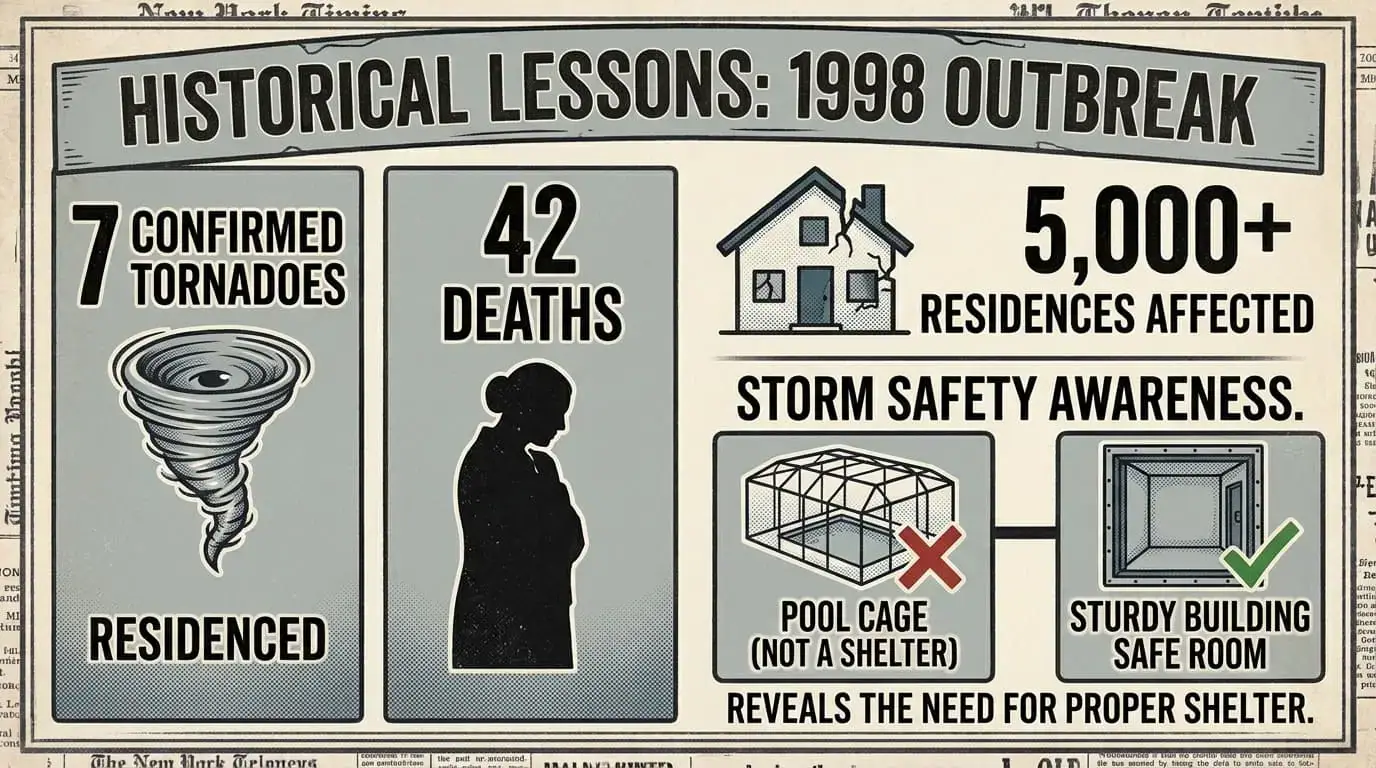
- Seven tornadoes and 42 deaths: The February 22 to 23, 1998, Central Florida outbreak produced seven confirmed tornadoes and killed 42 people. More than 3,000 structures were damaged and over 700 were destroyed, according to the NWS.
- More than 5,000 residences affected: Historical storm records report that over 800 residences were destroyed, 700 were left uninhabitable, and more than 3,500 sustained damage during the 1998 outbreak.
- Screen-removal design provisions: Florida’s building rules allow certain engineered screen enclosures to use removable, retractable, or designated cuttable panels. The approved design documents must identify the panels and the required procedure.
- Different costs for rescreening and replacement: Rescreening an intact frame generally costs less than rebuilding an enclosure. However, prices vary by screen area, height, access, mesh, frame condition, and engineering requirements.
- Six named communities in the initial local coverage: NWS advisories issued during the November 2 event included communities such as Lakeland, Plant City, Winter Haven, Bartow, Lake Wales, and Auburndale. The exact locations varied between advisory updates.
How Did Up to 6 Inches of Rain Affect Polk County?
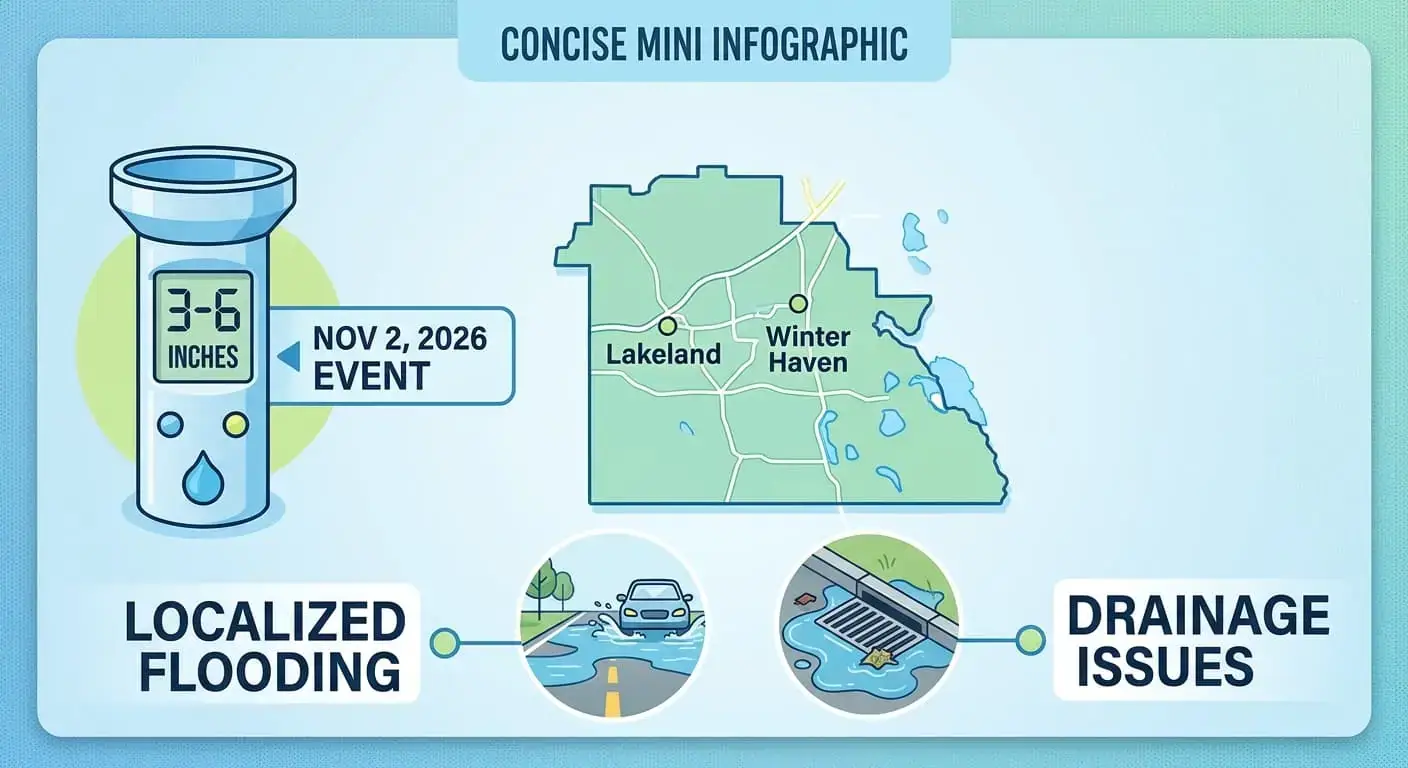
Parts of Polk County received between 3 and 6 inches of rain during the November 2, 2026, weather event, prompting flood advisories for low-lying areas. The rainfall caused localized flooding and raised concerns about drainage in communities around Lakeland and Lake Wales.
The NWS reported that heavy rain had already produced minor flooding in central Polk County. The advisory named Lakeland, Winter Haven, Bartow, Lake Wales, Auburndale, and other nearby communities. Additional rainfall was also expected in the affected area.
Reports from the event described especially heavy rainfall around Indian Lake Estates and Lake Wales. Areas west of downtown Lakeland also recorded several inches. These totals refer to accumulated rainfall during the event, not a rate of six inches every hour.
For homeowners, the immediate concern is where the water goes after it reaches the property. Poor drainage can leave water around pool decks, foundations, patios, and enclosure supports. Standing water may also carry leaves, branches, and other debris toward screen panels and aluminum framing.
A pool cage does not prevent yard or surface flooding. However, homeowners can reduce avoidable damage by keeping gutters and drainage paths clear, checking where runoff collects, and looking for signs of movement or corrosion around the enclosure.
Why Does NOAA’s Wetter-than-Average Winter Outlook Matter?
NOAA’s winter outlook favors wetter-than-average conditions across the southern United States, including Florida, from December 2026 through February 2027. That forecast increases the reason to prepare for periods of persistent rain, although it does not mean every Florida community will experience flooding.
NOAA’s October 15 outlook linked the wetter pattern to the developing El Niño. A stronger subtropical jet stream can shift storm tracks and favor more active weather across parts of the South. The agency also cautioned that increased precipitation can contribute to flash flooding, especially where drainage is limited.
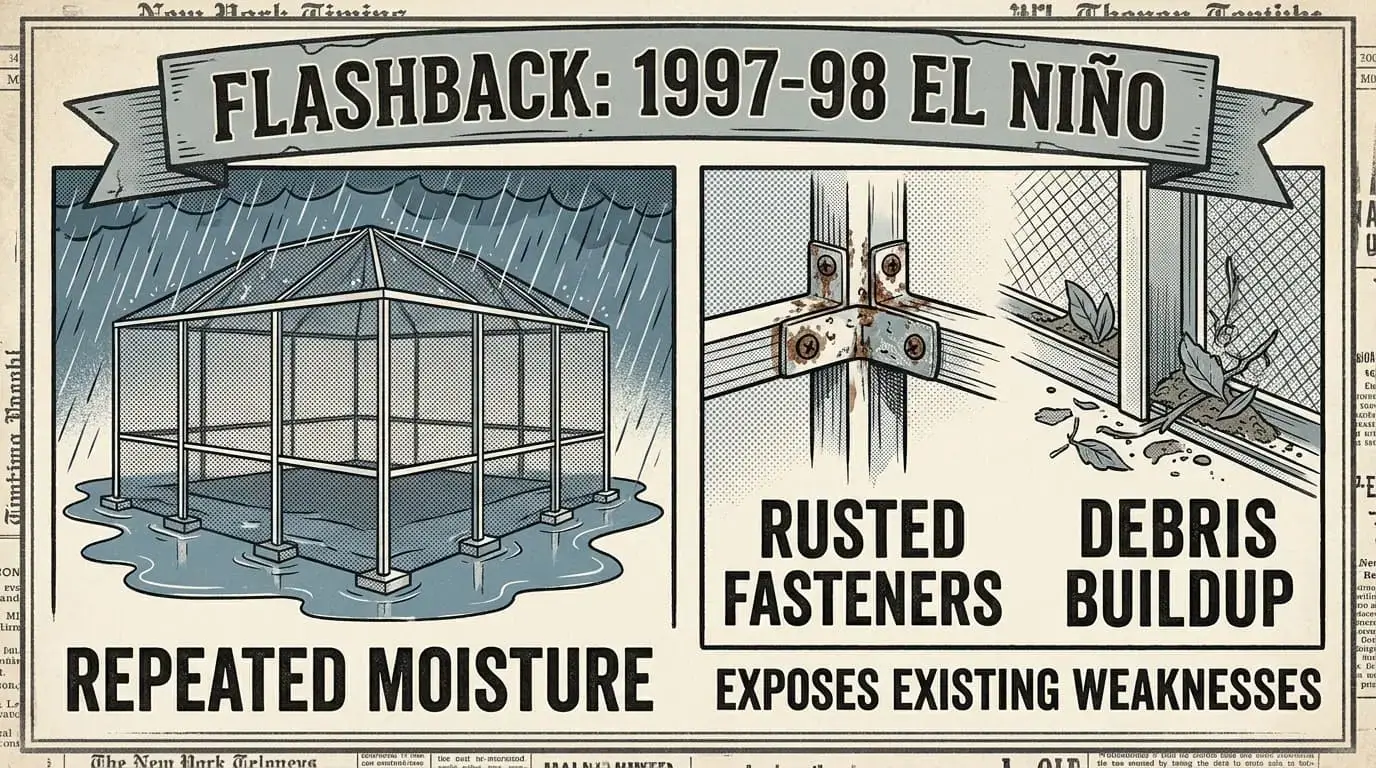
For Polk County homeowners, the forecast is a reason to review outdoor areas before repeated rain becomes a problem. Water can collect around pool decks and patios when drains are blocked or the ground cannot absorb more moisture. Repeated wet conditions can also expose existing weaknesses in fasteners, joints, and aluminum framing.
A seasonal outlook does not identify the exact day, neighborhood, or amount of rainfall. Homeowners should continue checking local NWS forecasts and alerts rather than treating the outlook as a property-specific flood prediction.
Practical preparation includes:
- Clear leaves and debris from gutters and downspouts.
- Check that yard drains and drainage channels are not blocked.
- Look for water collecting near enclosure posts and deck edges.
- Inspect screen panels for tears and loose spline.
- Check aluminum members and connections for corrosion, bending, or movement.
- Keep outdoor furniture and loose items secured before forecast storms.
What Does an 83% Super El Niño Probability Mean for Florida?
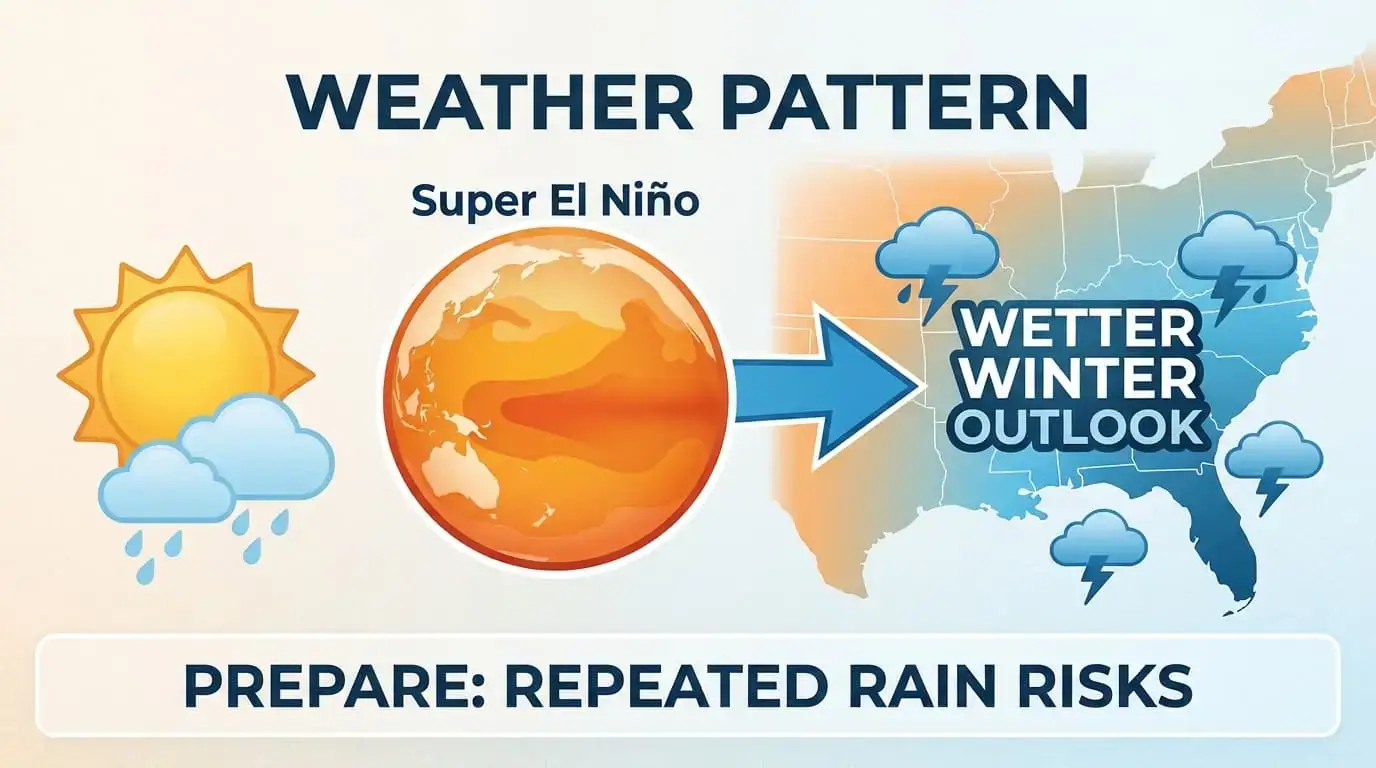
NOAA’s October 2026 climate discussion gave an 83% chance of a historic El Niño event for October to December, based on a threshold that would exceed the strength of previous events dating back to 1950. This probability describes the expected strength of the climate pattern, not an 83% chance of a particular storm or flood.
El Niño develops when sea surface temperatures in the central and eastern tropical Pacific become warmer than normal and influence atmospheric circulation. A strong event can shift the jet stream and change the location and frequency of storm systems affecting the United States.
NOAA also said a strong-to-very-strong El Niño was likely to continue through January to March 2027. That makes the winter outlook relevant to Florida, where the pattern can favor wetter conditions and more active storm periods.
However, El Niño does not determine the weather on its own. Local rainfall still depends on individual storm systems, fronts, moisture levels, and other atmospheric conditions. Some areas may receive heavy rain while others receive much less.
For homeowners, the useful response is to prepare for a range of weather conditions instead of assuming that a strong El Niño guarantees a specific outcome. A pool cage should be checked for existing damage, and any structural concerns should be assessed before severe weather arrives.
What Did Florida’s Wettest November to March Period on Record Teach Homeowners?
The 1997 to 98 El Niño winter showed how a strong climate pattern can coincide with prolonged wet conditions and damaging storms in Florida. Historical records describe the period as exceptionally wet, with flooding and severe weather affecting multiple parts of the state.
The National Oceanic and Atmospheric Administration’s historical report on the 1997 to 98 El Niño documented wetter-than-normal conditions across much of the southern United States. Florida also experienced major storm impacts during that season.
For homeowners, the lesson is not that every El Niño winter will repeat 1997 to 98. It is that repeated rainfall can expose weaknesses that may go unnoticed during drier periods.
Water can collect around enclosure footings, move soil, and leave debris against screen panels. Moisture can also worsen corrosion on older aluminum components and fasteners. These problems do not mean that every pool cage will fail, but they make routine inspection important.
Before winter, homeowners should look for:
- Rust or corrosion around screws, brackets, and connections.
- Loose or damaged screen panels.
- Bent aluminum members or visible frame movement.
- Water collecting around support posts.
- Cracks or deterioration around the pool deck and enclosure footings.
A screen repair can address damaged mesh, but it cannot correct a weakened frame or foundation. Homeowners should have structural concerns evaluated before paying for a full rescreen.
Why Do El Niño Winters Bring Nearly Twice as Many Tornado Events?
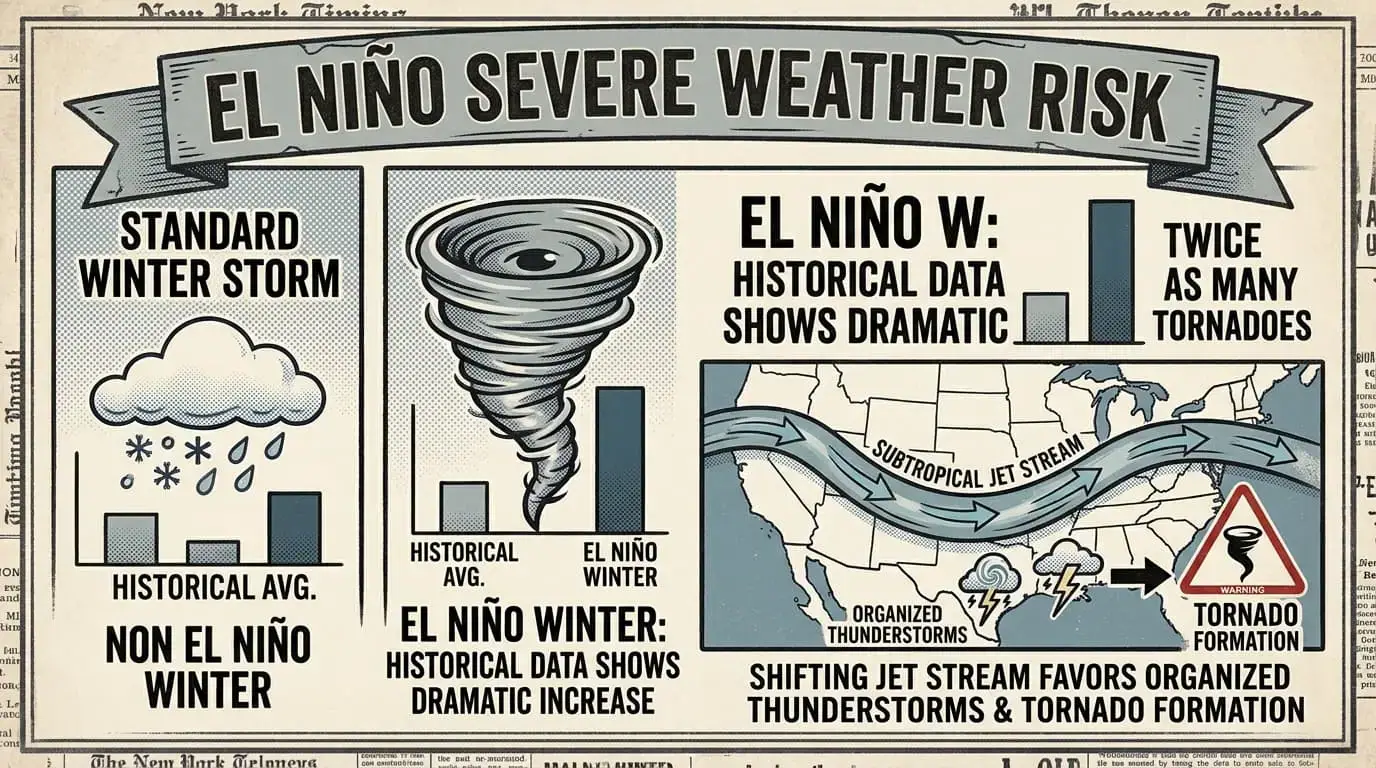
Historical weather analysis indicates that Central and South Florida experience nearly twice as many tornado events during El Niño winters as during non-El Niño winters. This pattern raises awareness of severe weather risk, but it does not predict an exact number of tornadoes for the 2026 to 27 season.
El Niño can strengthen the subtropical jet stream and shift storm tracks farther south. That can create conditions that support more active winter storm systems across Florida. When warm, moist air interacts with stronger winds and changing wind direction with height, thunderstorms may become more organized and produce tornadoes.
The increased historical frequency does not mean that every storm will produce a tornado. Tornado formation depends on several atmospheric factors that change from one weather system to another.
Homeowners should also understand that a pool cage is not a tornado shelter. Even a well-built enclosure is not designed to protect people from a direct tornado strike. During a tornado warning, residents should move to a small interior room on the lowest floor of a sturdy building, away from windows.
For outdoor structures, the priority is to secure loose items, follow local weather alerts, and arrange an inspection if a storm causes visible damage. Do not attempt to repair a bent frame or climb onto an enclosure during dangerous weather.
What Did the 1998 Outbreak’s 7 Tornadoes, 42 Deaths, and 5,000 Affected Residences Reveal?
The February 22 to 23, 1998, Central Florida tornado outbreak produced seven confirmed tornadoes and 42 deaths. The National Weather Service recorded more than 3,000 damaged structures and over 700 destroyed. Other historical records report that more than 5,000 residences were affected when destroyed, uninhabitable, and damaged homes are counted together.
The outbreak remains one of the deadliest tornado events in Florida history. It occurred overnight, when many residents were asleep and had less time to respond to warnings. Mobile homes and recreational vehicle communities were among the hardest-hit locations.
The figures need to be read carefully. The NWS account identifies seven tornadoes in its Melbourne forecast area. The wider event and related historical summaries may use different geographic coverage or count additional tornado activity. For the Central Florida outbreak discussed here, seven is the confirmed figure in the NWS assessment.
The event also shows why homeowners should not rely on one type of storm preparation. A pool cage, patio screen, or aluminum enclosure may be exposed to strong winds and flying debris, but it is not a substitute for a safe room or storm shelter.
After severe weather, homeowners should avoid touching damaged electrical equipment, stay away from unstable structures, and arrange a qualified inspection before using a damaged enclosure. A professional can help determine whether the problem is limited to the screen or involves the frame, connections, or supporting structure.
Why Does Florida Building Code §2002.7 Allow Certain Screen Panels to Be Removed?
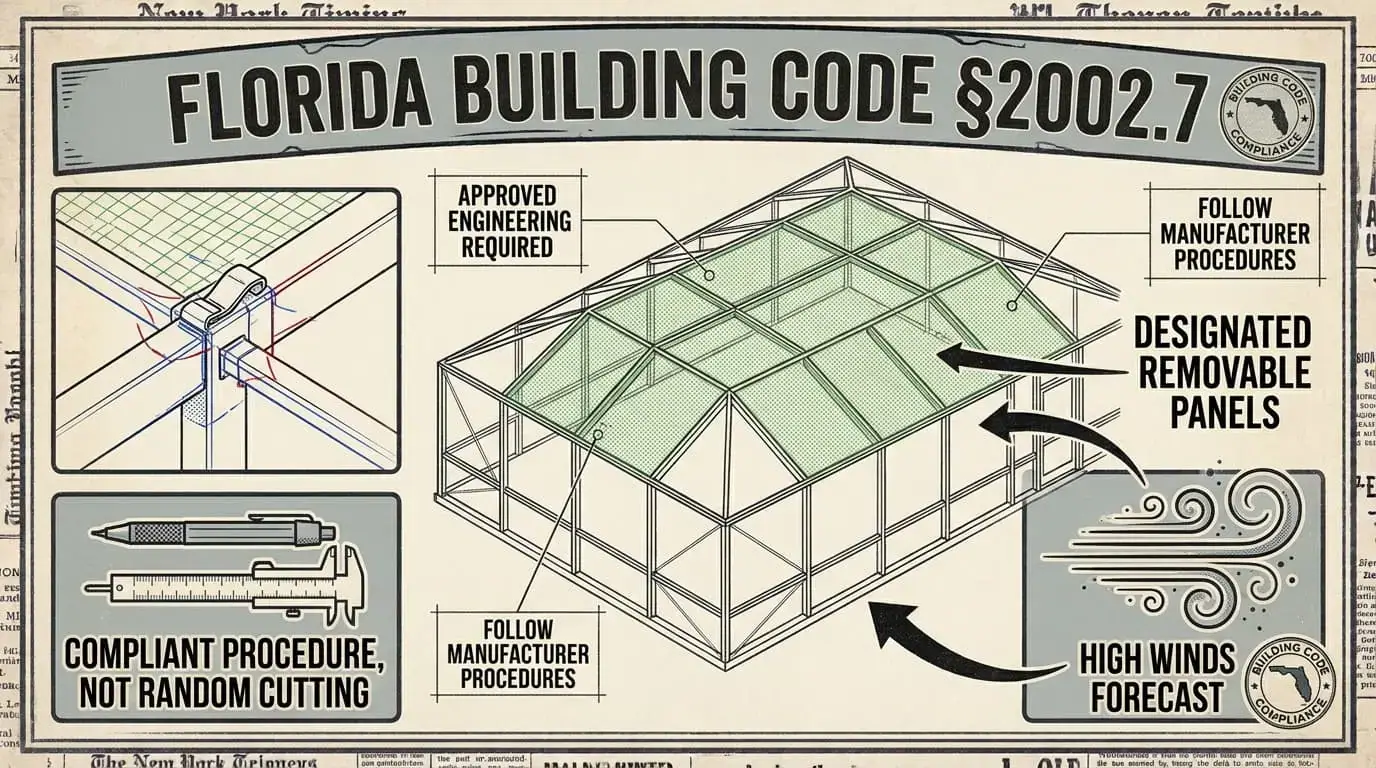
Florida’s screen-enclosure rules provide an alternate design option for certain engineered structures that allows designated screen panels to be removed, retracted, or cut before high winds. This provision does not apply automatically to every pool cage.
Under the screen-removal alternate, the enclosure must be designed and documented for that approach. The engineering documents identify which panels are intended for removal or cutting and explain the required procedure. The applicable provisions also set conditions for when the panels must be moved or cut based on forecast wind speeds.
This distinction matters because homeowners may see missing screen panels and assume the entire enclosure has failed. In some cases, panels may have been removed under an approved design. In other cases, missing screens may be the result of storm damage, worn spline, poor installation, or failed attachments.
Homeowners should not cut or remove screens simply because a storm is approaching. Doing so without confirming the enclosure’s approved design could create a safety issue or affect the structure’s intended performance.
Before taking action, check the permit and engineering documents or contact the contractor who installed the enclosure. If those records are unavailable, ask a licensed professional to assess the structure and confirm the correct procedure.
How Much Does a Pool Cage Replacement Cost?
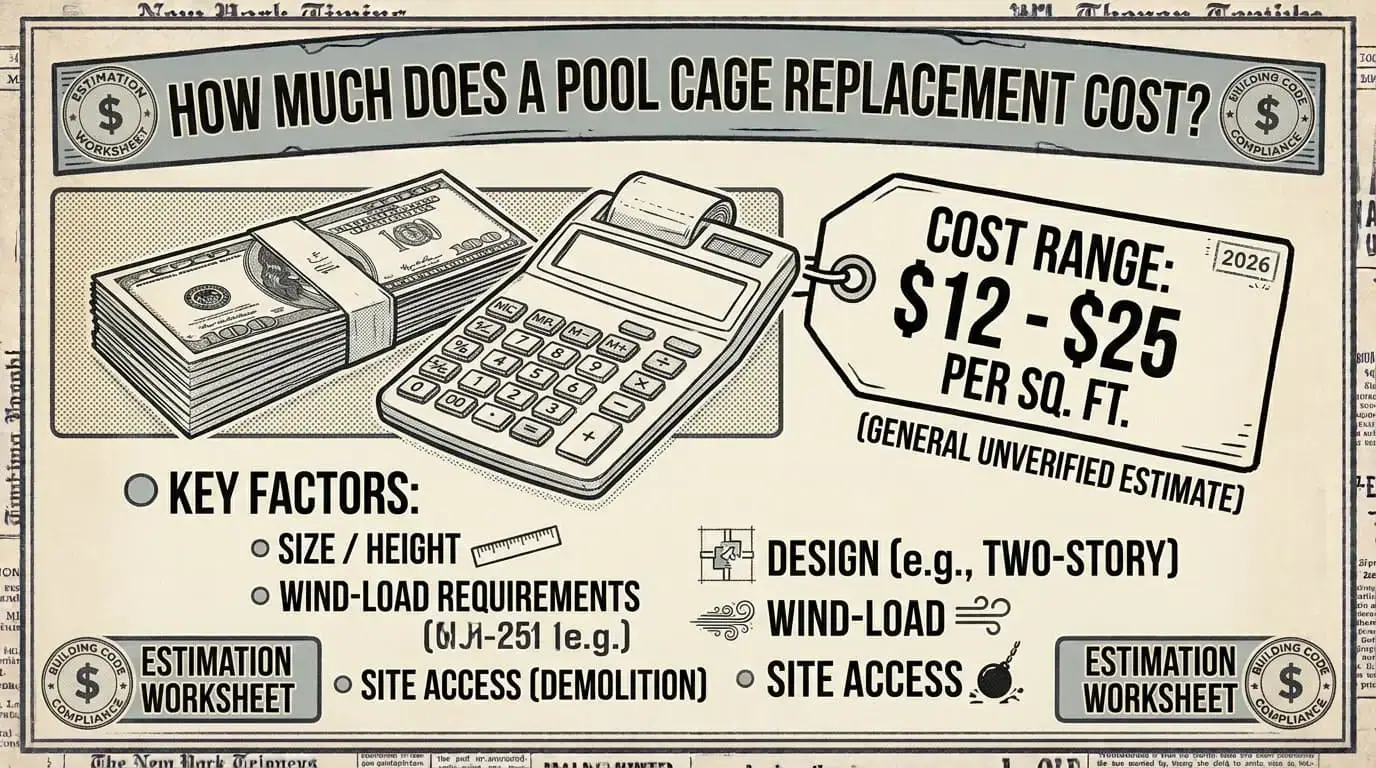
A full pool cage replacement can cost several thousand dollars or more, depending on the enclosure’s size, height, design, materials, and site conditions. A single per-square-foot figure should not be treated as a reliable quote for every Polk County property.
Some published Florida cost guides give broad estimates for new screen enclosures, but their figures vary. One 2026 guide places a typical new aluminum enclosure at approximately $12 to $25 per square foot of enclosed floor area, with taller and custom structures costing more. These figures are general estimates, not a verified price list for every Central Florida contractor.
The final price can change based on:
- Overall enclosure dimensions and roof design.
- Standard, tall, or two-story construction.
- Aluminum frame condition and required replacement.
- Local wind-load requirements and engineering.
- Permit and inspection requirements.
- Site access, demolition, and debris removal.
- Custom features such as wider openings or upgraded screen mesh.
A replacement project may also involve more than installing a new aluminum frame. Contractors may need to remove the old structure, assess the deck and anchors, prepare engineering documents, obtain permits, and install a new enclosure that meets the applicable building code.
Homeowners should request an itemized estimate that separates demolition, materials, labor, engineering, permits, and any deck or footing work. Comparing quotes on the same scope makes it easier to understand the actual cost.
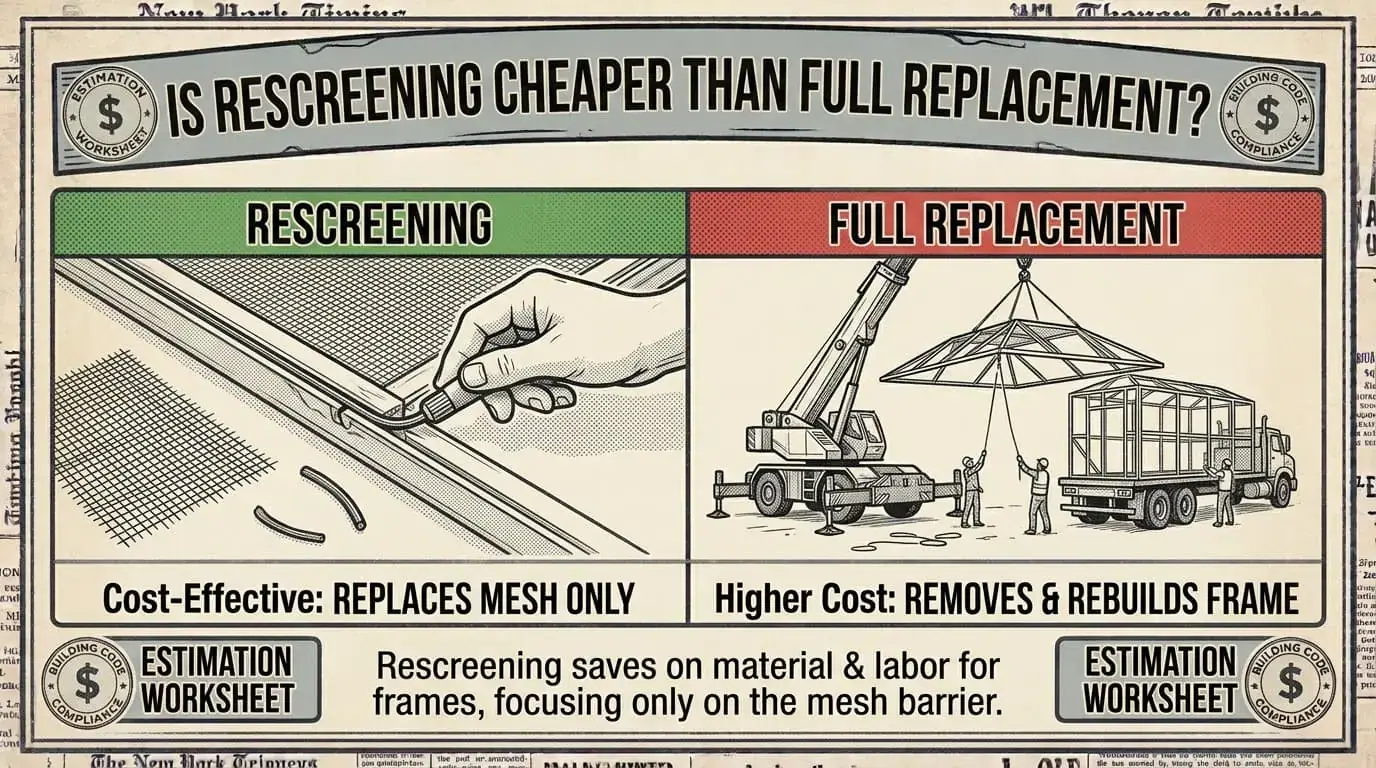
Is Rescreening Cheaper Than Full Replacement?
Rescreening is usually less expensive than full replacement when the aluminum frame and its connections remain structurally sound. It replaces damaged mesh without requiring the homeowner to rebuild the entire enclosure.
Published estimates vary because contractors may calculate costs using different measurements. Some price screen by the actual mesh area, while others provide per-panel or whole-project estimates. Screen type, panel size, enclosure height, and access can also affect labor costs.
| Project type | What the work includes | Main cost factors |
|---|---|---|
| Partial rescreen | Replacing selected torn or loose panels | Panel size, mesh type, service access |
| Full rescreen | Replacing most or all screen panels | Total screen area, enclosure height, mesh selection |
| Frame repair | Repairing or replacing damaged aluminum components | Extent of corrosion, bending, connection damage |
| Full replacement | Removing and rebuilding the enclosure | Design, materials, engineering, permits, labor |
For example, a homeowner with a few torn panels may only need a partial repair. A full rescreen may make sense when the mesh has deteriorated across the enclosure but the frame remains sound.
However, rescreening is not the right solution for every damaged pool cage. If posts are bent, beams are sagging, connections are corroded, or anchors have moved, new mesh will not solve the underlying problem. A structural inspection should come first.
The best way to avoid unnecessary costs is to identify the actual damage before choosing a repair. Ask the contractor to explain whether the recommendation involves screen replacement, frame repair, or a complete rebuild.
Which Six Polk County Communities Were Included in the Flood Advisory?
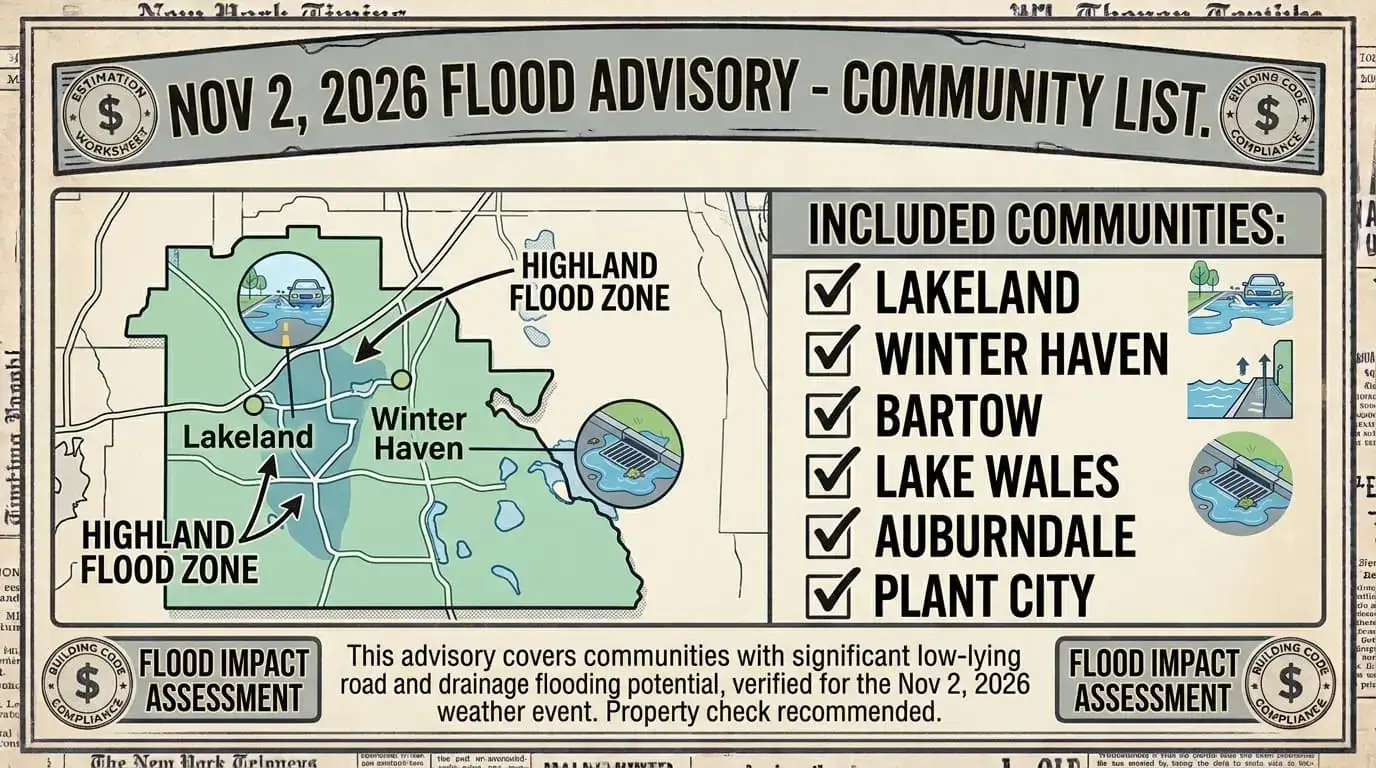
National Weather Service flood advisories issued on November 2, 2026, covered parts of Polk County and named several communities, including Lakeland, Plant City, Winter Haven, Bartow, Lake Wales, and Auburndale. The locations varied between advisory updates, so the six communities should not be treated as one fixed list from a single notice.
The later NWS advisory for central Polk County reported that between 3 and 6 inches of rain had fallen. It included Lakeland, Winter Haven, Bartow, Lake Wales, and Auburndale among the locations where minor flooding was ongoing or expected. An earlier advisory also covered west-central Polk County and northeastern Hillsborough County, including areas around Lakeland and Plant City.
These notices show that flooding concerns can affect communities across the county, not just properties beside major lakes or waterways. Low-lying roads, poor drainage, and saturated ground can create problems after heavy rain.
Homeowners in Lakeland, Plant City, Winter Haven, Bartow, Lake Wales, and Auburndale should monitor local NWS alerts during periods of heavy rainfall. They should also check their own properties for standing water, blocked drainage, and storm debris around outdoor structures.
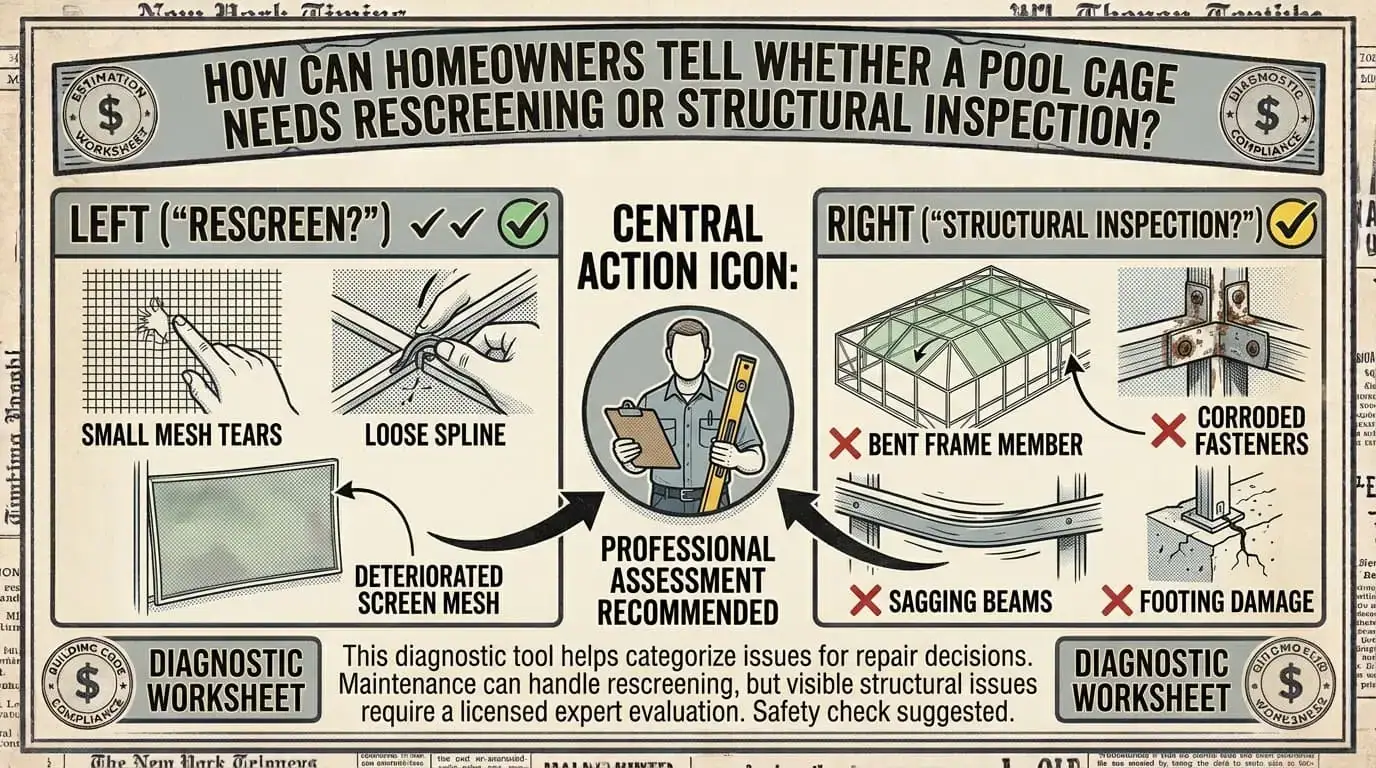
How Can Homeowners Tell Whether a Pool Cage Needs Rescreening or Structural Inspection?
The difference depends on whether the damage affects only the mesh or also involves the aluminum frame and its supports. A professional assessment can help determine which repair is appropriate.
Signs that may indicate a rescreening job include:
- Small tears or holes in otherwise intact screen panels.
- Loose screen spline around panel edges.
- Faded or brittle mesh.
- A few panels damaged by branches or outdoor debris.
- Screen doors that need mesh or hardware replacement.
Signs that call for a closer structural inspection include:
- Bent or separated aluminum members.
- Sagging roof beams or visible frame movement.
- Corrosion around posts, brackets, or fasteners.
- Loose or damaged connections.
- Cracks or movement around support areas.
- Damage that appeared after a major storm.
Screen selection also affects how an enclosure performs in daily use. Standard mesh, no-see-um mesh, pet-resistant mesh, and Florida Glass serve different purposes. Spline selection and panel dimensions must match the enclosure system to keep the screen properly secured.
Homeowners should also check doors, latches, and the pool barrier. Florida pool safety requirements apply to the barrier around a pool, so a damaged screen door or self-latching gate should not be overlooked.
A screen enclosure contractor can assess mesh and installation issues. Structural concerns may require a licensed professional or engineer who can review the frame, connections, anchors, and applicable wind-load requirements.
Prepare Your Pool Cage Before the Next Storm
A damaged pool cage can leave your outdoor area exposed just when you need it to be secure. But not every damaged screen requires a full replacement. Check for bent aluminum or loose supports, and confirm your enclosure’s approved storm-preparation instructions before removing any panels.
True Aluminum helps Central Florida homeowners assess pool cages and screen enclosures. If you’re unsure whether your structure needs a repair or a closer inspection, contact True Aluminum to discuss the next steps, or start with pool cages.
