
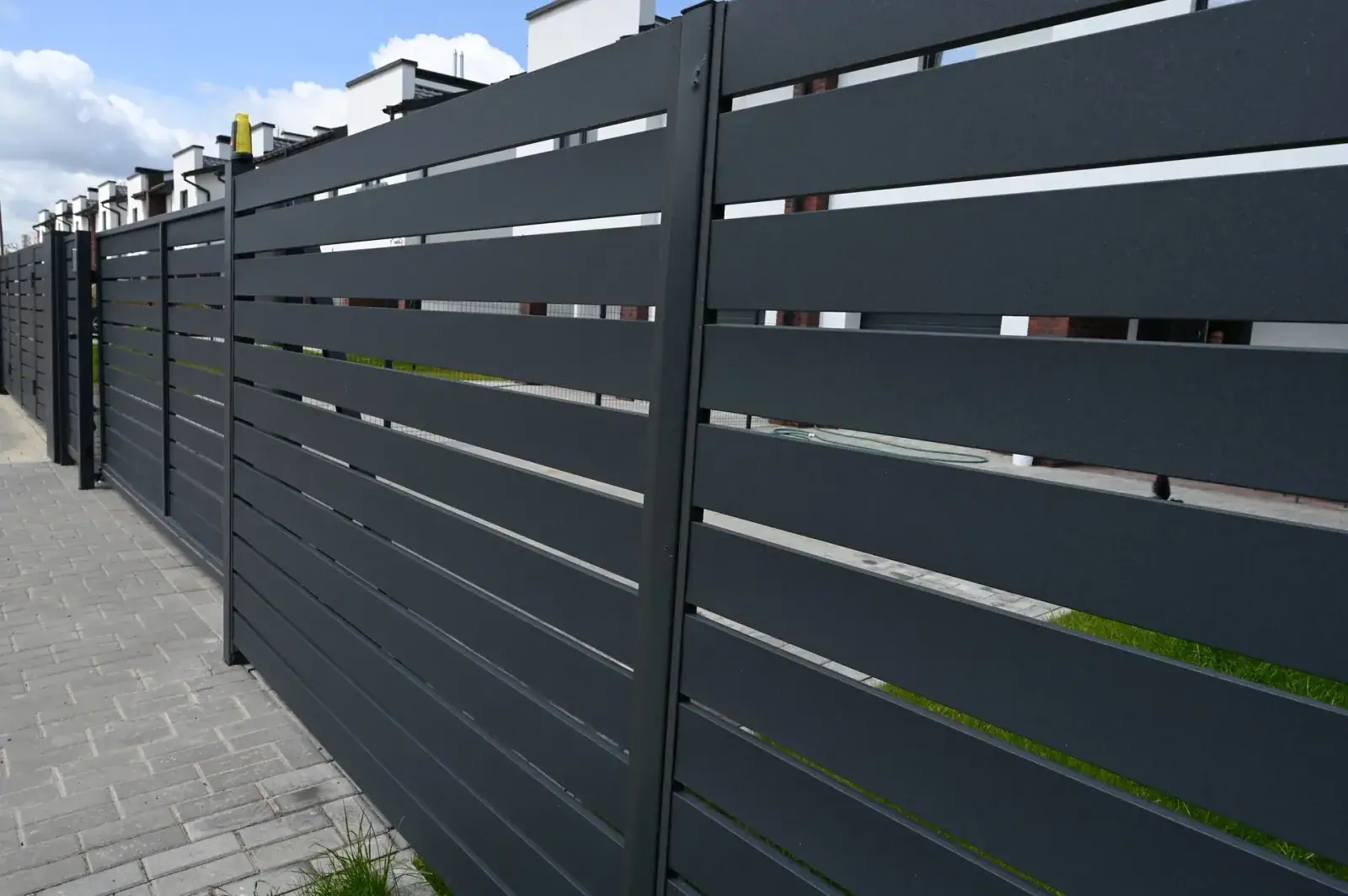
People ask whether an aluminum fence or a vinyl fence is the one that survives a Florida yard. The sun is the test. So is the gate. True Aluminum installs aluminum fence and rail in Lakeland and Central Florida. We do not install vinyl.
What the Florida sun does to each one
Aluminum fence is metal with a coating. It does not rot, and it does not need a stain the way wood does. The coating is the part you watch. A mower nick or a screw that cut through the finish is where pitting starts. Wipe that spot and touch it up. The rest of the run can sit for years.
Vinyl fence is plastic. It will not rust. In full west sun it can chalk, and a panel that takes a hit can crack instead of bend. Once a vinyl picket splits, that piece is a replacement, not a paint job. Shade from an oak helps. A fence in the open does not get that break. A west lot line in Lakeland sits in that sun from midafternoon on. That is the run we look at first.
Wood is the third option people price, then drop. It needs stain, and it moves when the ground stays wet after a summer storm. We do not build wood fence either.
Posts, concrete, and the bottom gap
The panel is the part you see. The post is the part that decides whether the gate still latches in August. We set posts in concrete, past the soft topsoil. A post in loose sand leans, and the latch misses by a finger width. After that, people prop the gate with a brick.
The bottom of the fence is the other failure. A panel that follows a hill can rack, which means it tilts with the grade and the bottom stays close to the ground. A stepped panel stays level and leaves a triangle of open ground at the low end. That triangle matters if the fence is keeping a dog in or a small child out. We walk the slope before we order panels, and we say which layout the yard wants.
Irrigation heads that spray the bottom rail every morning leave a green film on the coating. Move the head, or the film becomes the yearly chore.
Rails, gates, and a pool
A rail along a porch and a fence at the lot line are the same metal for us, with a different spacing. Stair rails need a graspable top and a spacing a child cannot slip through. A yard fence is about the lot line, the neighbor, and the dog. We measure those as separate runs even when they share a color.
The gate is the piece that fails first. Hinges sag when the post was set in soft soil, or when a wide gate has one hinge doing all the work. We set the post so the latch still meets after a summer of use. A gate that drags on pavers will tear the coating on the bottom rail within a season.
If the fence is also the barrier at a pool, height and gaps are a building-department question at that address. Florida talks about a four-foot barrier and self-closing, self-latching hardware. A pool cage can satisfy that on some parcels. Some lots still want a fence and a latch even when a cage is already there. Ask the office that covers the address before the posts go in. We will not guess that for you.
Walk gates and drive gates
A walk gate is a three-foot or four-foot leaf. One person uses it. The post spacing is ordinary, and the latch sits at a height you can reach with a grocery bag in the other hand.
A drive gate is two leaves, or one long leaf, across a driveway. The weight is the problem. A long aluminum leaf still needs a post that does not twist, and it needs a drop rod or a cane bolt so the leaf stays put when the wind comes across an open yard. We size that opening to the widest vehicle you actually park, including mirrors. A gate that clears the car and clips the trailer mirrors is the wrong width.
If the drive gate is also the pool barrier, the self-closer has to work on that heavy leaf, not only on the walk gate by the lanai. That is a hardware check, and we put it on the drawing.
What we install
We measure the run, the gates, and the slope. Color is usually white, bronze, or black. We match the rail on the lanai when the fence is in the same view from the street. If an HOA has a color sheet, bring it to the measure. We will not order a bronze run and then repaint it to satisfy a letter.
Pickets can be standard spacing or a tighter spacing on the street side when privacy is the point. Tighter spacing uses more metal and blocks more breeze. On a pool barrier, the gap rule comes from the building department, not from a catalog photo.
License SCC131151391. The shop phone on the site is (863) 804-6021.
Coating, nicks, and a yearly look
The maintenance on an aluminum fence is short. Walk the run once a year. Look at the gate hinges, the latch, and any screw that cut the coating. A mower nick on the bottom rail is the usual one. Touch up that spot. Leave the rest of the fence alone.
Do not pressure-wash the coating at a range that peels it. A garden hose and a soft brush take off the oak pollen. If a neighbor’s sprinkler hits one bay every day, that bay will look older than the rest of the line. Fix the sprinkler.
A bent picket from a backing trailer can often be replaced as one piece. A post that has leaned needs the concrete redone. Those are different visits, and we say which one you have before anyone orders parts.
Porch rails and stair rails
Rail on a porch, a ramp, or a stair is a different layout from a yard fence, even in the same color. The posts tie to the slab or the stair stringer. A rail that only screws into thin paver sand will loosen. We look at what the rail is actually grabbing.
If the porch rail and the new yard fence will be seen together, we match the color and the picket style. A black rail on the lanai and a white fence at the street is a choice. A black rail and a white rail on the same porch looks like two jobs that never met. The styles are on the aluminum fencing and rails page.
When vinyl is the other trade
If you want vinyl, that is a different contractor. We will not price a vinyl run as if it were aluminum, and we will not hang vinyl pickets on our posts. If you want the fence that we permit with the rest of the aluminum on the house, it is the aluminum fence.
What to have ready for the measure
A rough length of each side, the number of gates, and a photo of the slope are enough to book the visit. If a pool is on the lot, say so, and say whether a cage is already there. If the old fence is still standing, leave it up so we can see the post locations and the gates you already use. We pull it when the new posts are ready, not before the measure.
