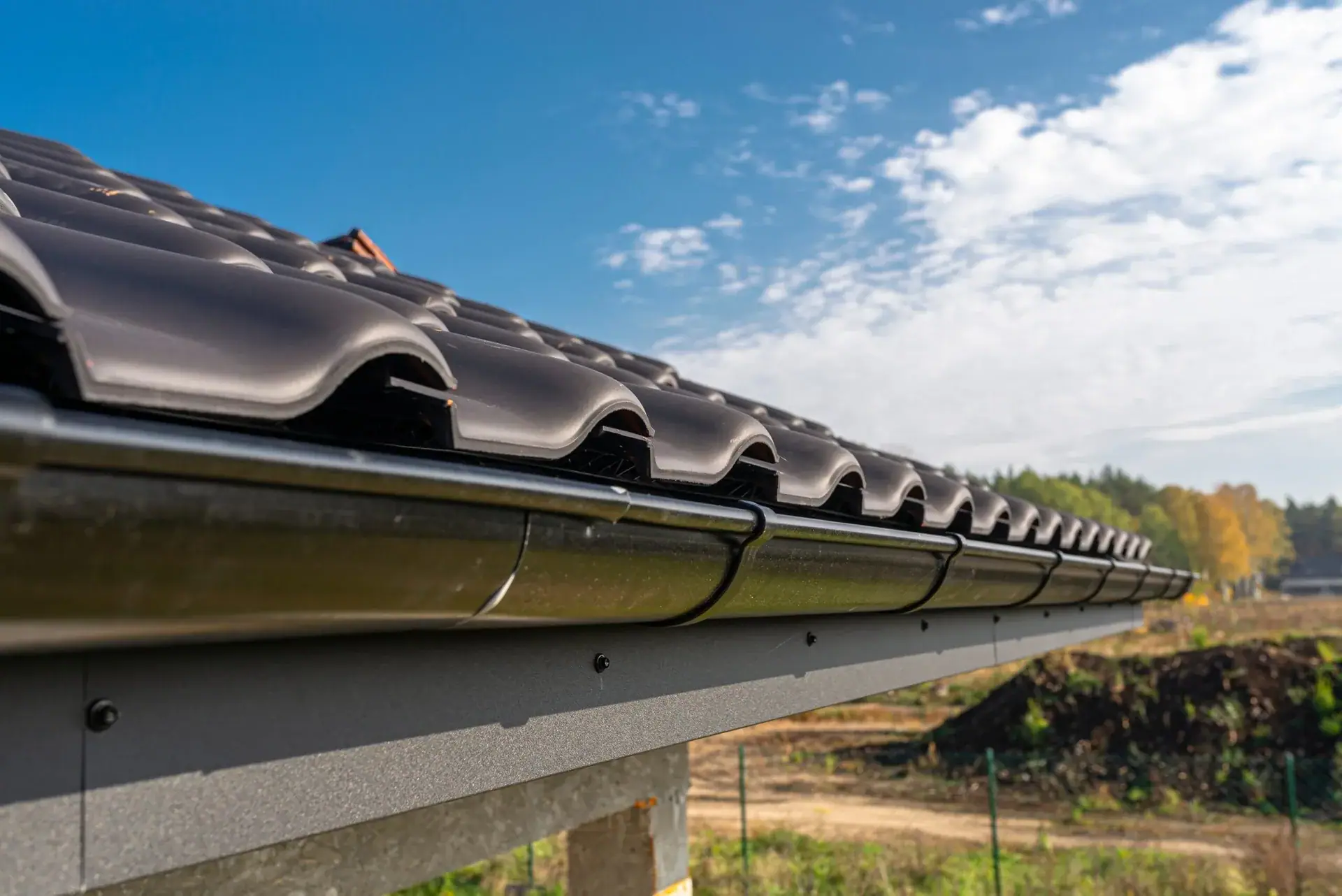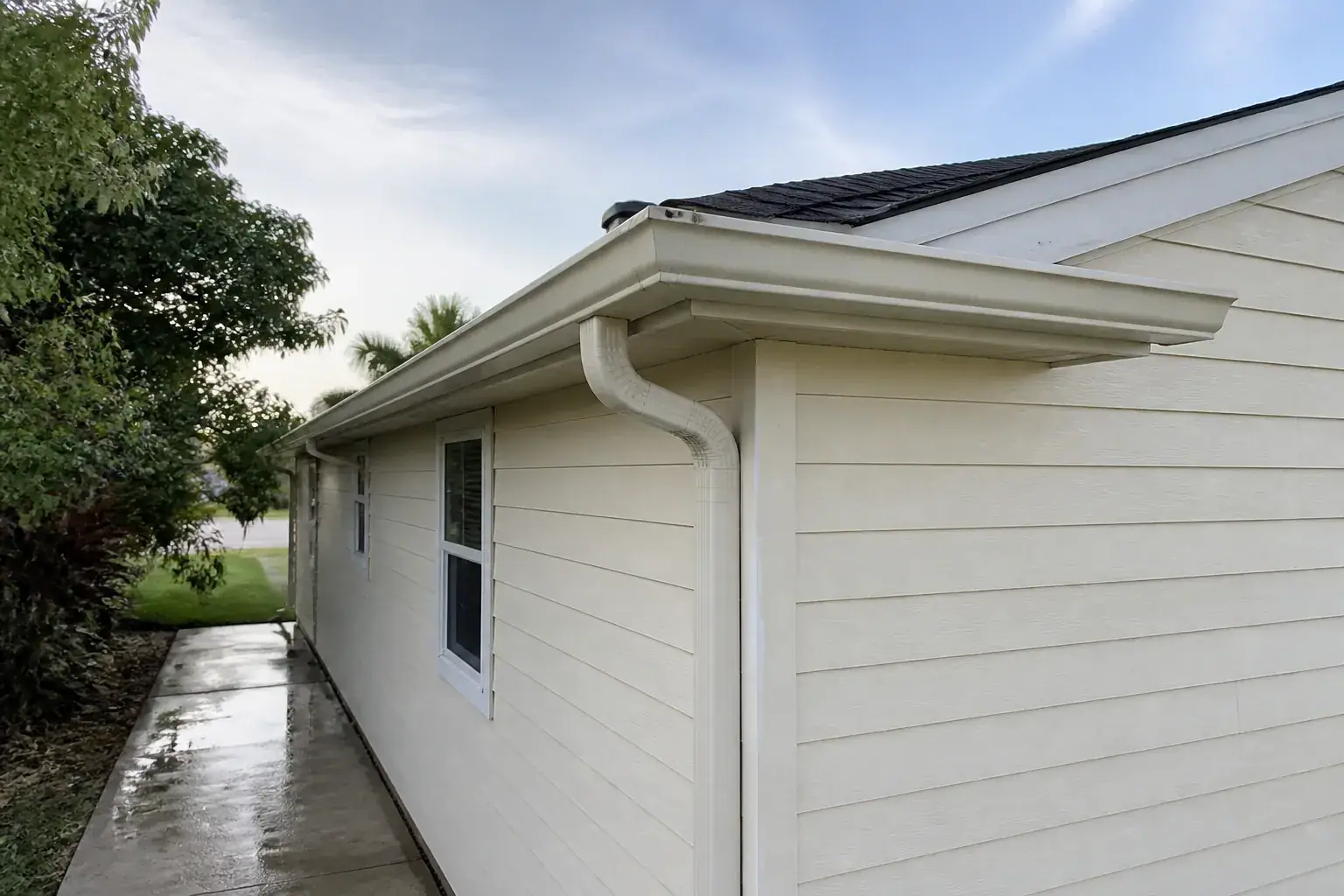
Homeowners ask how long aluminum gutters last in Florida because the last set failed in ten years and the quote said thirty. Both numbers show up. The fascia, the pitch, and the size of the trough decide which one you get.
On our gutter installation page we treat 20 to 30 years as the normal life of a seamless aluminum run that was hung on solid wood, with pitch toward the outlets. That is not a warranty line. A gutter on rotten fascia, or a run with no fall, will not get there. A run that overflows every August beats the fascia from behind, and that wood fails long before the aluminum does.
What a 10-year gutter and a 25-year gutter look like
A gutter that is still good at 25 years still holds water, still falls toward the outlets, and still has hangers in solid wood. The coating may look dull. Dull is fine. Chalk that wipes off on your hand means the finish is gone and the metal is next.
A gutter that fails around year 10 usually has one of three problems. The hangers pulled out of soft fascia. The trough is too small for the roof, so it overflows and soaks the board. Or the outlets sit level with the middle of the run, so water stands after every storm. Standing water stains the trough and breeds mosquitoes at the water line. Age is not the test. A 15-year gutter that still pitches and still holds water can stay.
What actually ends a gutter
The metal rarely rusts through the way steel does. The coating chalks. Hangers pull out of soft wood. A joint at a corner opens and stains the stucco. Oak litter packs a narrow trough until water sits.
Overflow in the middle of a run usually means the trough is too small or the pitch died. Overflow only at a corner usually means that outlet is clogged, or the corner was never given fall. Those are different repairs. A new gutter does not fix a corner that only needed a cleanout.
Rust streaks on an aluminum trough are often the steel screws, not the gutter. Swap the fastener and the streak stops. A brown line under the eave, on the soffit or the wall, means water has been missing the trough or running behind it. That one needs a look at the drip edge and the hanger line.
Fascia and hangers
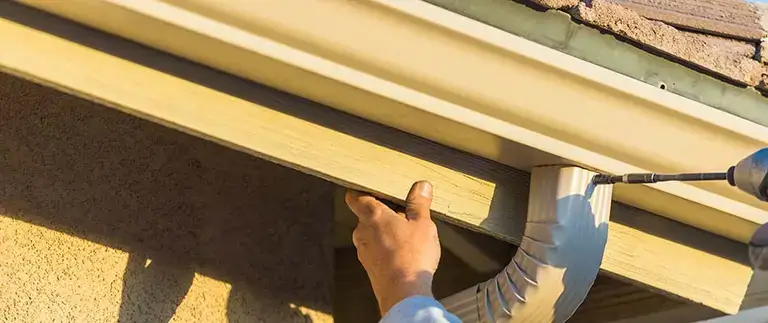
Hidden hangers screw into the fascia. On residential runs the usual spacing is about every 18 to 24 inches, closer where a valley dumps a lot of water into one spot. That spacing is a trade standard we already use on the cost page. A hanger in rotten wood lets go, the trough sags, and the pitch dies in that bay.
We do not hang new gutter on rotten fascia. The wood gets repaired first. Rehanging an old run on new fascia wastes the trip if the metal is already chalked through. If the run sits along a screen enclosure, the panels usually come out so we can reach the board. Pair that with a rescreen when the mesh is due anyway.
Aluminum coil for a house gutter is commonly .027 or .032. The .032 coil is the heavier of the two. It dents less when a ladder hits it, and it sags less on a long span. We spec the gauge on the estimate for that house. Run length and hanger spacing change what is appropriate. We do not publish one gauge for every roof.
5 inch or 6 inch
House runs are 5 inch or 6 inch. A 5 inch trough is enough for a small roof plane. A wide plane, or one run that takes the whole back roof, wants 6 inch so the middle does not overflow in a summer storm. Two outlets on a long wall move that storm better than one outlet at the corner.
The size does not add years by itself. A 6 inch trough with no pitch still holds water. A 5 inch trough with real fall and enough outlets can outlast a bigger trough that was hung flat. Overflow is what shortens the life, because the water that misses the metal soaks the fascia.
Pitch, outlets, and oak litter
A small fall toward each outlet is the whole job. Hidden hangers hold that fall. If the middle of a 40-foot wall is the high point and each end has an outlet, the water has somewhere to go. One outlet at a single corner on that same wall leaves the far end standing.
Live oak and laurel oak drop debris into open troughs for months. A narrow 5 inch run under a big oak packs solid. Water then sheets over the front lip and down the wall. Cleaning that run twice a year is maintenance. Replacing it because it was never cleaned is a different bill. We will say which one you are looking at.
A gutter guard does not fix a dead pitch. If the water already sits in the trough, a cover on top still leaves a pond underneath. Fix the fall first.
Where the downspout has to land
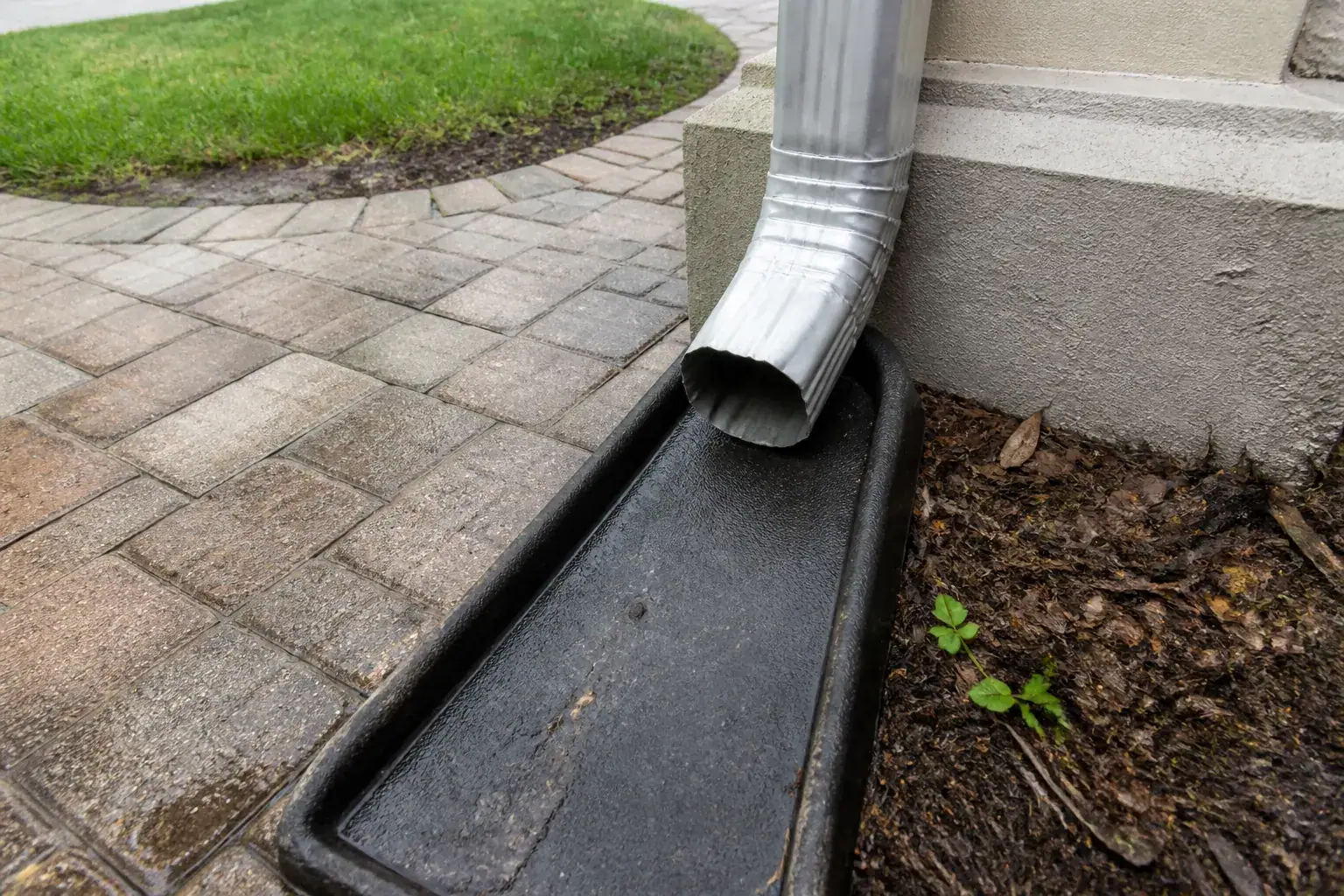
The downspout has to leave the slab. On a lanai, it has to land outside the screen. Water that drops on the pavers only moved the problem six feet, and it will stain the pavers and splash the bottom of the screen.
On a pool cage, a house downspout that dumps onto the cage roof loads the screen and the beam. We route that outlet past the enclosure. A splash block in the mulch is enough on a simple wall. A long roof needs the downspout carried farther, so the water does not sit against the footer.
A super gutter is a different piece
A super gutter on a pool cage is a structural beam that also carries water. Public figures put that beam around $1,500 to $2,500 installed. That is a market range, not a True Aluminum quote, and it is not the 20-to-30-year house gutter. It is permitted with the enclosure. Its life follows the cage: anchors, beam, and the screen tied to it. Do not compare that line to a fascia run on the front of the house.
Seamless runs and the joints that remain
We form house gutters on site from one coil. The long wall has no seam every ten feet. The joints that remain are the corners and the outlets. Those are the spots to watch. A corner that opens stains the stucco under it. An outlet that was cut rough will catch oak litter and clog first.
Sectional gutter, the kind sold in ten-foot sticks, has a joint at every stick. Those joints are where Florida rain finds a leak. Once one lets go, the next ones are usually close. That is why a replacement on an old sectional run is usually a seamless run, not another set of sticks.
When repair is enough
Sag between hangers on a sound board is more hangers, or hangers moved closer together. White chalk that wipes off on your hand means the coating is gone. Stains under the eave mean water has been missing the trough. A dent from a ladder is a dent. It does not end the gutter unless it holds a pond.
We measure, then we say repair or replace. A straightforward replacement on an existing house is usually treated as maintenance. Gutters that are part of a new lanai, carport, or pool-cage super gutter are permitted with that structure. We confirm before we schedule. License SCC131151391. Call (863) 804-6021.
What to photograph before we come
One photo of the overflowing spot, one of the downspout at the ground, and one of the fascia if the paint is bubbling. Tell us if the house is one story or two, and whether a lanai or a cage sits under that run. The size, the cost bands, and the permit note are on the gutter installation page. The office measure starts from 2829 Badger Rd #19 in Lakeland.